
WRITERS CLUB · YEARS 1–6
From “I hate writing” to "Mum, Look What I Wrote!”
Writing isn’t a talent. It’s a set of skills vocabulary, structure, ideas, grammar. At FunFox, we teach these skills step by step so your child knows exactly what to do, how to do it, and starts genuinely enjoying the process.
No commitment · One free class · No pressure

5,000+ Families
enrolled across Australia
Gold Medal Winners
Commonwealth Writing Comp
★★★★★ Google Rated
Verified parent reviews
AU Curriculum Aligned
Built for Australian schools
5,000+ Families
Gold Medal Winners
★★★★★ Google Rated
AU Curriculum Aligned
5,000+ Families
Gold Medal Winners
★★★★★ Google Rated
AU Curriculum Aligned
THE PROBLEM
If writing feels like a daily battle for your child…
you’re not alone.
REAL FAMILIES. REAL RESULTS.
What parents say about Writers Club
Real parents. Real children. Real progress, in the Writers Club.
THE INSIGHT
The problem isn’t effort. It’s the lack of structure.
Children aren’t failing because they’re not trying. They’re struggling because no one has shown them how to take an idea and build it into a complete piece of writing, one step at a time.
The gap
Most programs ask children to write more without ever teaching how.
Our way
We break writing into simple, teachable skills taught in the right order,
every week.
OUR APPROACH
We don't just practice writing. We build writers.
See exactly how the FunFox method is different from typical writing programs.
Typical approach
No clear method or progression
Generic feedback on every task
Random skills, random progress
Writing becomes a chore, not a skill
The FunFox way
Step-by-step writing system
Personal feedback on every piece
Skills built in the right order
Visible progress every single term
THE PROCESS
How your child improves
Three clear phases. Each one builds on the last.
01
Build the foundations
Vocabulary, sentence structure, planning and ideas, taught clearly before anything else. Your child builds the raw materials they need before writing a single sentence.
02
Practice with purpose
Paragraphs, openings, and conclusions built step by step. Children learn to organise their thoughts and express them clearly, with feedback on every single piece.
03
Feedback that builds confidence
Creative confidence grows through storytelling, descriptive writing, and real reading practice. By term end, writing feels natural — not like a task to get through.
This isn't a tutoring service. It's a writing transformation.
Not someday. This term. One hour a week is all it takes, when the method is right.
REAL FAMILIES, REAL STORIES
What parents start noticing
Real changes happen when structure meets encouragement.
“Have both my kids enrolled and have seen a marked difference in their skill and attitude towards writing. Seeing the girls write for enjoyment has been the biggest achievement.”
Sidrah H. Year 8 Google review
“I’m amazed at the words she has started using since FunFox. It doesn’t feel like a class more like a fun activity she looks forward to every single week.”
Parsa N. Year 5 Google review
“My son is now the best at his spellings and writing in his class. I wish team FunFox all the success special thanks to Ambreen for her dedication.”
Rabel Z. Year 3 Google review
Term 1
Pre-assessment
R
Rayyan Awais
Year 4
On a dark, windy night there was a boy with a plain, light blue t-shirt and he was blowing massive bubbles that made popping sounds. There was blue flowers just like the boys t-shirt. The hills were as bumpy as grooves. The sun was rising high and high to the sky so it could smile down at everyone. He had a white, fabric bag on his back and a orangish, brown coloured pair of pants on him that made everyone starve because it was the exact same colour as a fresh Dairy Milk chocolate bar. He walked while blowing bubbles enjoying his time outside at night.
Term 2
Post-assessment
R
Rayyan Awais
Year 4
Did you know that your lives are in danger because you don't take a phone with you to school? There are 3 goated reasons for this topic that i would like to share with you which are emergencies at school, at home and ordering essentials when at school.
First and foremost, it significantly improves handling emergencies at school. Studies suggest that over 30% of schools cannot be saved in time because of the lack of phones. For example, if there is a fire at school you can quickly dial "000" and save everybody trapped. This is absolutely why phones are supposed to be brought to school.
Secondly, they maybe an emergency at home and you have to go. Videos significantly showed us that if family needs anyone for help we cannot respond because we won't know. Think about it like this, your dad broke his back he has to call you to fix it. This is why phones save lives.
Last but not least, you can order things you need. Student surveys represented that they were starving to death because they forgot their lunch but they didn't have a phone either to order a cheap $6 lunch from their bank account. For example, you're starving. grumble! What would you do? Order or ask your guardian for a food delivery. This is why you cannot survive without bringing a phone to school.
In conclusion, there are a lot of reasons why students need to have phones. They are emergencies at school, home and ordering essentials. You must take your parents old phone (for free) or get a new one, put it in your backpack and you're ready to skadadle to school. This will save our lives and stop them from submerging fully into danger.
PROOF
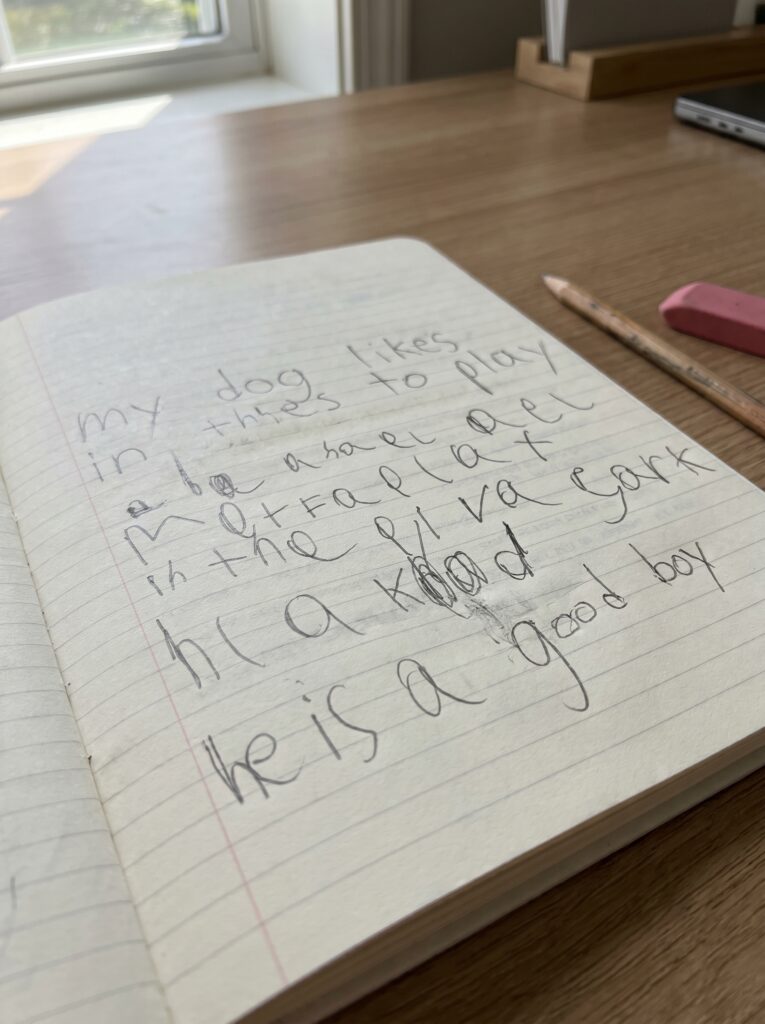
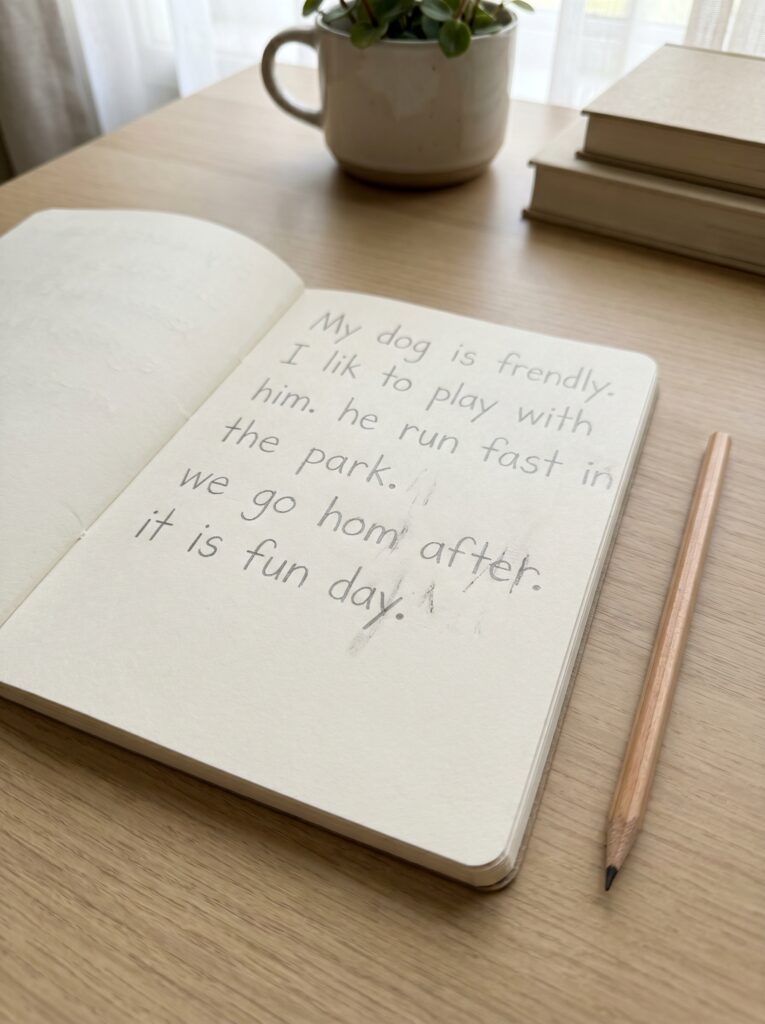
See the difference two terms can make
Real student writing before FunFox and after just one term.
BEFORE · Term 1
Disorganised, vague, short sentences. No structure.
AFTER · Term 2
Structured paragraphs, richer vocabulary, clear ideas.
Child’s name Mary · Year 4 · Enrolled Term 2 2024
Writers club
No hidden charges, no lock-in, just one clear price per term.
$495 / per term
or $165/month · 3 monthly payments · $80 one-time enrolment fee
Personalised feedback
Written notes on every task
Small Groups
3-6 students per class
Class recordings
Via the Learning Den portal
No Lock-In
Cancel before next term
Less than $50 per class, qualified teacher, personal feedback, small group that genuinely learns together.

Writers club
No hidden charges, no lock-in, just one clear price per term.
$495 / per term
or $165/month · 3 monthly payments · $80 one-time enrolment fee
Personalised feedback
Written notes on every task
Small Groups
3-6 students per class
Class recordings
Via the Learning Den portal
No Lock-In
Cancel before next term
Less than $50 per class, qualified teacher, personal feedback, small group that genuinely learns together.
COMMON QUESTIONS
Everything parents want to know answered honestly.
No jargon. No corporate language. Just clear answers to the questions parents actually ask before and after enrolling.
📚 About the program
No and that distinction really matters. Tutoring covers school content and homework. FunFox teaches the thinking and expression system that sits underneath every subject vocabulary, structure, idea development, feedback habits. A child who goes through FunFox writes better in English, science, history, and every subject that requires written communication. These are permanent skills, not subject-specific fixes.
Not at all. Children resist writing because it feels confusing and pointless when they don’t have a clear method. Once they have a system, what to write, how to start, what to do next the frustration drops. Most children who join hating writing leave within one term actually choosing to write. The resistance isn’t about writing. It’s about not knowing where to begin.
Yes, this is one of the most common things we see. The problem isn’t the ideas. It’s the absence of a system for organising them before writing starts. We use structured planning techniques including mind mapping that help children take everything in their head, sort it clearly, and build it into something coherent. Once they have that tool, it changes everything.
About half our students are already performing well at school. They join because they want to go from good to exceptional. The skills we teach structure, vocabulary development, precise expression are exactly what separates average writing from writing that genuinely stands out. Strong students often see the fastest improvement because the ideas are already there. They just needed the framework to express them.
Schools cover writing across 25–30 students with limited time for individual feedback. FunFox teaches the process of writing how to plan, structure, draft and refine in small groups of 3–6, with written feedback on every single piece of work. The explicit skill-teaching and individual attention schools simply don’t have time for is what we do every week.
✏️ Skills and learning
Absolutely. Spelling, grammar and punctuation are core parts of the program throughout the year. We use specific activities including spelling-focused games that make learning these things interactive rather than tedious. Teachers also use a sandwich feedback method: one strength, one specific thing to improve, and encouragement to try again. It builds accuracy without destroying confidence.
This is exactly what free writing exercises are designed for. We give students a prompt and five minutes to just write no pressure on quality, no judgment on content. This breaks the blank-page paralysis and builds the habit of getting thoughts moving. Over time children stop freezing entirely and start generating ideas naturally, quickly, and with confidence.
This is one of the clearest signs that planning techniques haven’t been taught. We start by teaching students to plan before they write using mind maps, outlines, and structured frameworks. Once a child sees their ideas laid out in a logical order before touching the page, the writing that follows is dramatically more coherent. It usually takes just a few weeks for this to become a habit.
Yes, directly, but not through exam drilling.
NAPLAN, OC and Selective exams all rely on underlying skills such as reading comprehension, written expression, vocabulary and the ability to structure a clear, coherent response under time pressure. These are the skills our Readers Club and Writers Club develop throughout the year. For OC, Readers Club builds the reading comprehension, vocabulary and analytical skills that transfer directly to the assessment. For Selective, we recommend building the foundation early. Starting Readers Club and Writers Club from at least Year 5 gives children time to develop strong reading, vocabulary, analytical thinking and written expression skills. In Year 6, the Selective School Booster builds on those foundations and takes students into more targeted preparation for the exam. The clubs build the underlying skills. The booster adds the specific exam layer when it matters.
📅 Classes and scheduling
Each week your child receives two to three short homework activities usually 10 to 15 minutes each introducing new concepts before class. They upload their work to the Learning Den portal and receive written teacher feedback. Then comes the one-hour live Zoom class where that week’s concept is taught, practised, and discussed in the group. After class the recording is available to review. It’s a complete weekly learning loop not just a one-hour class and nothing else.
Always 3 to 6 students. This is non-negotiable at FunFox. Small enough that your child gets genuine individual attention and the teacher knows their specific strengths and gaps. Large enough for peer discussion which research consistently shows accelerates learning significantly compared to one-on-one sessions. The group dynamic is a feature, not a compromise.
Missed classes can be rescheduled through the Learning Den portal. If rescheduling isn’t possible, a full recording of every class is available so your child never misses the content. We always recommend attending live because the group discussion and peer interaction is where much of the learning happens but no session is ever completely lost.
It depends on age. Year 1 parents yes, we ask you to be present. Year 2 we recommend being nearby. From Year 3 onwards children are fully independent and we actually encourage parents to step back. Letting your child take ownership of their learning is part of the development. We guide every family through this as their child settles in.
Yes, at enrolment you select from available time slots that suit your schedule. All times are shown in your local timezone. We offer morning, afternoon, and evening sessions across Monday to Sunday to accommodate different family routines. If your preferred slot fills up, you can join a waitlist.
💳 Enrolment and pricing
Primary programs (Foundation Club, Writers Club, Readers Club) are $495 per term paid as three monthly instalments of $165. High School Literacy Club is $240 per month for a three-month term. A one-time enrolment fee of $80 applies on signup. There are no hidden charges beyond these.
No. Our program is structured term by term each term focuses on a different type of writing. You can join at the start of any term and your child will be fully up to speed from day one. There is no disadvantage to starting mid-year. Any term is the right term to begin.
One term gives you a genuine feel for the method and you will notice a shift in attitude and willingness to write. One year is where measurable improvement in writing quality becomes significant. Two to three years is where it becomes permanent children who stay that long develop writing as a genuine strength. We never pressure long-term commitment. But we are honest that the biggest results come from giving the process time.
Yes, two. If your child enrols in a second FunFox program, you receive 10% off the term fee for that program. If you enrol a second sibling, they also receive 10% off their term fee. The $80 enrolment fee applies once per child across all programs they join.
There are no mid-term cancellations once a term has started this reflects our belief that real progress needs sustained effort. To cancel before the next term, simply log into the Learning Den portal and cancel before the end of Week 9 of the current term. The cancellation deadline is clearly displayed in your account at all times. If you don’t cancel, enrolment automatically rolls over to the next term.
🧒 Ages and programs
Not at all. Our Foundation Club is specifically designed for Years 1 and 2. Classes are highly interactive and game-based not passive screen time. Year 1 parents are encouraged to sit with their child during class, which makes it a shared experience.
Year 6 is actually one of the most important times to invest in writing foundations before the jump to high school. At this age we recommend Writers Club to solidify writing skills, and Readers Club if comprehension and analysis are a concern. Students who enter Year 7 with strong writing and reading habits have a measurable advantage from day one. We can help you choose the right program during the trial class.
Yes, many families enrol children in both Writers Club and Readers Club simultaneously, particularly in Years 3–6. The two programs complement each other directly. Writing improves when reading comprehension deepens, and reading analysis improves when writing skills strengthen. A 10% discount applies to the second program.
Still have a question?
Our team responds quickly, usually within a few hours. No scripts, no pressure, just honest work.

Writing is a skill. The earlier you start, the easier everything becomes.
From $165/month · Ages 6–12 · Live online · Cancel anytime